Texture Journal
Internal Standards
There is a quiet idea disappearing from modern culture: that some things should be done correctly even when no one is watching.
The Cost of Getting Things Right
We live inside systems optimized for visibility. Metrics reward immediacy. Attention substitutes for understanding. Craft is increasingly judged by how well it performs, not by how faithfully it adheres to its own rules. In that environment, internal standards, standards that exist independent of praise, are treated as inefficiencies.
Most organizations respond by adapting. They explain themselves more loudly. They simplify. They smooth edges. They learn to seduce.
A. Lange & Söhne did something else.
They refused.
When Standards Exist Without an Audience
Internal standards are not preferences. They are constraints. They dictate how work is done regardless of market reaction. They make growth harder, not easier. And they tend to disappear first when scale arrives.
In modern luxury, scarcity is often engineered. Desire is manufactured. Objects are wrapped in narrative so the buyer knows what to feel before they encounter the work itself. The standard becomes external: applause, price, waitlist length.
Lange operates as if none of that were reliable.
Not because the company is unaware of how the world works, but because it appears to believe those signals are insufficient to govern the work.
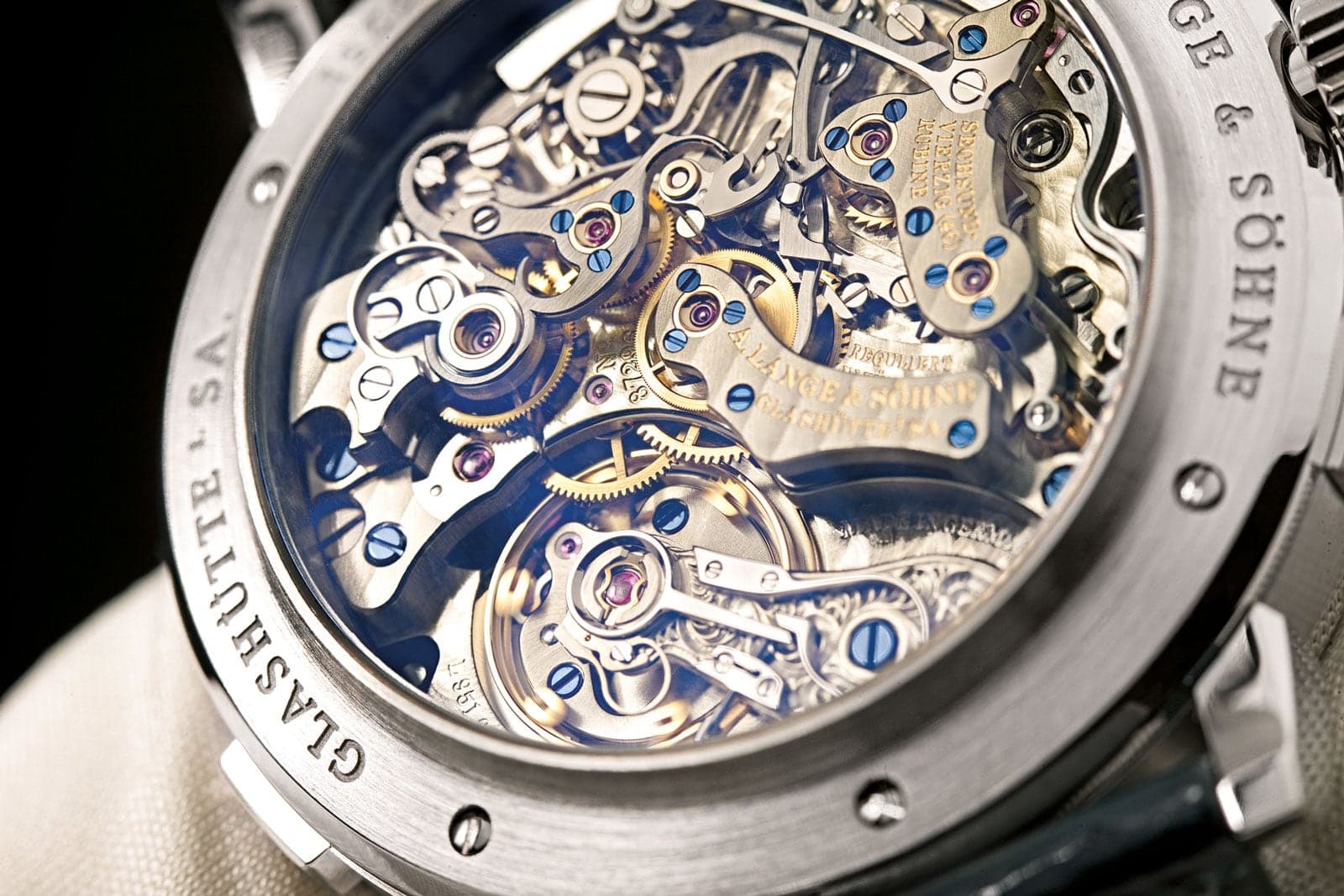
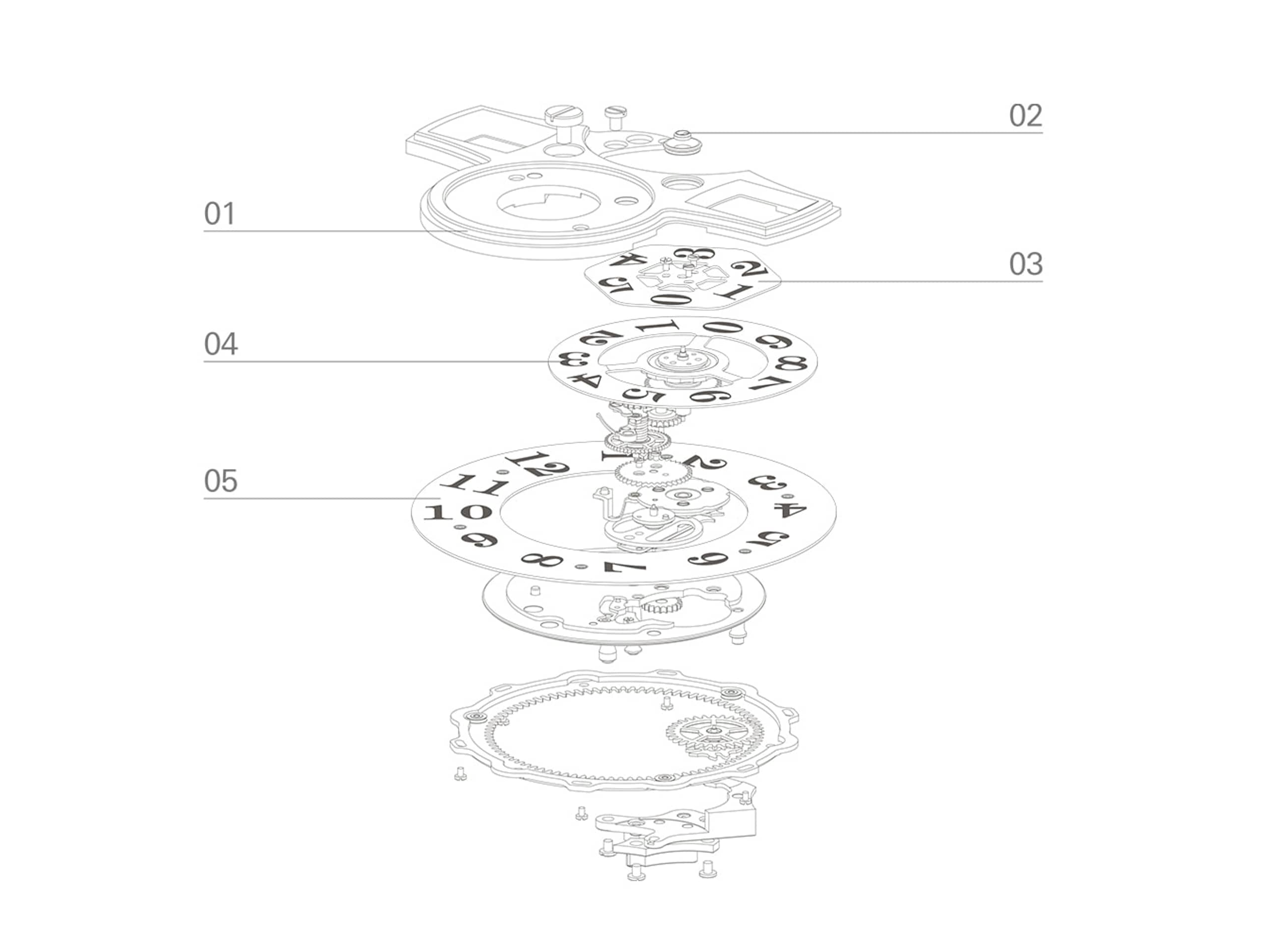
Consider the double assembly. Every Lange movement is assembled twice. The first time, the watchmaker builds the entire caliber to verify that each component functions correctly. Then it is taken apart completely. Every part is cleaned again. The movement is rebuilt from zero. This process adds nothing to the spec sheet. It does not make the watch more complicated. It does not create talking points for advertisements. It only satisfies one requirement: that the work be done correctly.
Or consider the hand engraved balance cock, Lange's most distinctive visual signature. Each engraver undergoes three years of training before they are permitted to engrave a single production balance cock. The floral patterns, executed freehand, vary subtly from piece to piece. No two are identical. This means every watch carries a fingerprint, an unrepeatable mark of the person who made it. A collector could, in theory, identify the engraver. But that is not the point. The point is that the standard exists before the audience does.
A Company Rebuilt After Erasure
Lange's modern existence begins with absence.
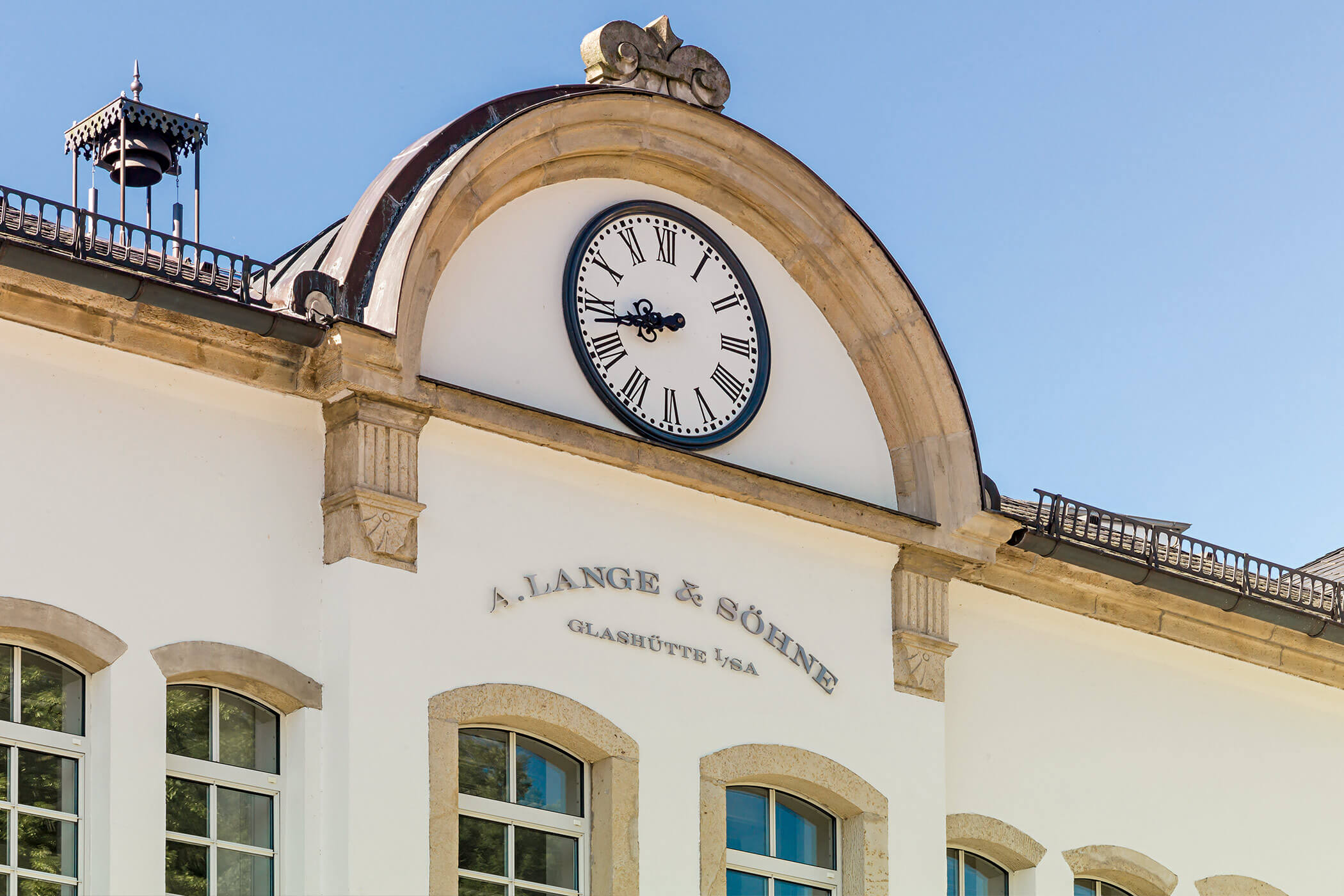
The original company was founded in 1845 by Ferdinand Adolph Lange in the small Saxon town of Glashütte, transforming an impoverished mining region into a center of precision watchmaking. For over a century, Lange timepieces competed with the finest Swiss houses and graced the wrists of kaisers, scientists, and explorers.
Then the company was nationalized after World War II. Its tools were confiscated. Its name erased. For four decades, Lange existed only as memory. When Walter Lange, great grandson of the founder, re-established the manufacture in December 1990, just weeks after German reunification, there was no uninterrupted prestige to lean on. No mythology to preserve through continuity alone.
Rebuilding meant choosing what mattered enough to resurrect.
The decision was not to modernize tradition, nor to imitate Swiss counterparts. It was to reconstitute a system of rules: proportions, tolerances, finishing standards, and an almost uncomfortable insistence that nothing be justified by convenience.
On October 24, 1994, Lange unveiled its first collection: four watches, including the Lange 1 with its asymmetric dial and outsized date display. The design broke nearly every convention of the era. The movement, visible through a sapphire caseback, featured a three quarter plate in untreated German silver, hand engraved inscriptions, and blued steel screws. Every surface visible or not was finished to the same standard.
From the beginning, Lange watches were not designed to impress at distance. They were designed to withstand inspection.
The Refusal to Seduce
Luxury typically explains itself. Lange does not.
There is no attempt to democratize desire. No performance of accessibility. Communication is sparse, almost austere. The watches are not framed as symbols of achievement, but as outcomes of discipline.
This restraint is not aesthetic minimalism. It is operational.
You can see it in what Lange does not do:
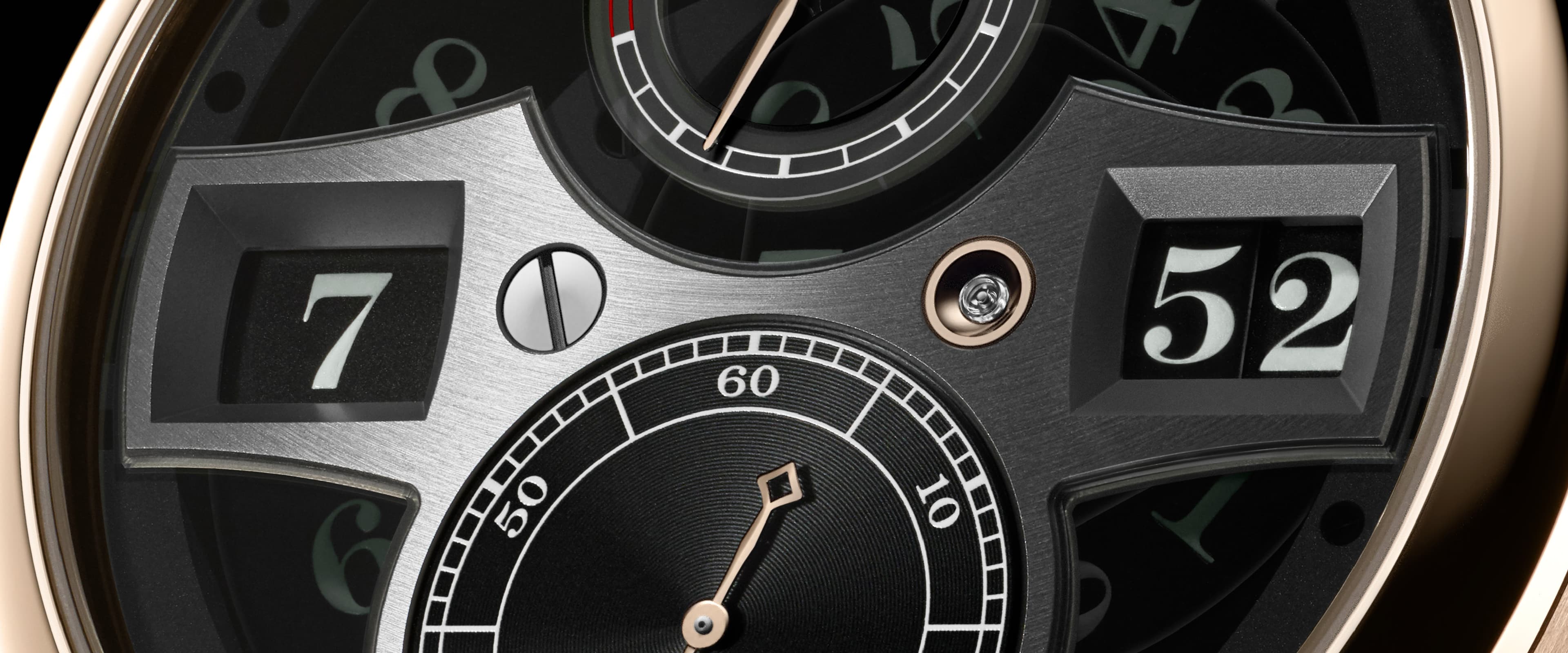
It does not chase novelty for its own sake. While competitors release dozens of limited editions annually, Lange focuses on refining existing references. When they do introduce complications, they are genuine technical achievements: the Datograph, considered by many collectors to be the finest mechanical chronograph ever made. The Zeitwerk, with its unprecedented jumping digital display. The Triple Split, capable of measuring comparative times up to twelve hours.
It does not flatten complexity to broaden appeal. Lange's website does not feature aspirational lifestyle photography. Their boutiques do not mimic nightclub aesthetics. The brand assumes the buyer already understands why they are there.
It does not outsource explanation to influencers or spectacle. Where many brands narrate meaning into objects, Lange seems to remove narrative and let the object endure the silence.
This posture is not accidental. It is stewarded.
Stewardship Over Growth
Wilhelm Schmid, who has led Lange since 2011, rarely speaks in terms of dominance or expansion. When he does speak publicly, it is usually about limits: why certain paths are closed, why some compromises are unacceptable, why growth must submit to correctness rather than correct itself after the fact.
Under his leadership, Lange has treated scale as a risk factor.
The manufacture produces roughly 5,000 to 6,000 watches per year. For context, major Swiss brands produce that volume in a week. This constraint is not marketing. It is structural. Every caliber requires hundreds of hours of handwork. There are not enough trained engravers, finishers, and watchmakers on earth to multiply that number significantly without diluting the standard.
When Lange announced internal guidelines requiring boutique staff to vet potential buyers, some saw elitism. But the logic was different: if demand permanently exceeds supply, then distribution itself becomes a curatorial act. The question becomes not who wants the watch but who will steward it.
Not because growth is inherently corrupting, but because growth applies pressure. Pressure reveals whether standards are real or performative. Most organizations respond by redefining the standard. Lange appears to respond by absorbing the cost.
Precision as Ethics
Lange movements are finished on surfaces the owner will never see.
This detail is often repeated, but rarely examined for what it implies. The three quarter plate, a broad slab of German silver that covers most of the movement, is decorated with Glashütte stripes, a finishing pattern executed by hand at precise angles. The underside of this plate, visible only when the watch is disassembled for service, is finished to the same standard as the display side.
Finishing unseen components does not improve resale value. It does not change first impressions. It does not advertise itself.
It only satisfies one condition: internal correctness.
Compare this to common practice elsewhere. Many Swiss manufactures use visible finishing on display surfaces while leaving hidden components with machining marks or matte finishes. This is rational from an efficiency standpoint. But it reveals a philosophy: that craft is ultimately about perception.
Lange's approach suggests the opposite. The work must be right in places where recognition is impossible. Anything less would mean the standard is conditional.
This is where Lange diverges most sharply from contemporary craft culture. The goal is not beauty as display. It is coherence as obligation.
Parallels Beyond Watchmaking
This commitment to internal standards is not unique to horology. Other disciplines demonstrate similar tensions between visible execution and invisible principle.
Hermès maintains what they call vertical integration, ownership of virtually every step in the production process. They tan their own leather. They raise their own silk worms. They control not just quality but provenance. When demand for Birkin bags exceeds supply, they do not accelerate production. They build new ateliers, train new craftspeople, and wait. Growth is permitted only when the standard can follow.
In architecture, firms like Peter Zumthor's office produce a fraction of the work that larger practices generate. Projects take years longer than industry norms. But the buildings, when they arrive, feel inevitable rather than designed. The Therme Vals, his thermal bath complex in Switzerland, is built from 60,000 slabs of local quartzite, each cut to precise dimensions. The experience is seamless. The effort is invisible.
In publishing, certain houses, Fitzcarraldo Editions in London, New Directions in New York, operate at margins that would horrify larger conglomerates. They publish slowly, carefully, with an aesthetic rigor that extends from content to paper stock to typography. The constraint is not accidental. It is the point.
What these examples share is a willingness to refuse optimization. They accept that doing things correctly is not always compatible with doing things efficiently. And they operate as if that trade off is worth making, permanently.
The Cultural Moment
We live in an era when craft has become content. Makers are expected to document their process, explain their choices, justify their prices. Social proof replaces material proof. The factory tour becomes indistinguishable from the product.
In this environment, Lange's reticence feels almost transgressive.
Their involvement in classic car events, the Concorso d'Eleganza Villa d'Este, the Concours of Elegance at Hampton Court Palace, provides a useful frame. These gatherings celebrate objects that are no longer produced, vehicles whose value lies precisely in their refusal to be updated. The cars on display are not efficient. They are not practical. They require tremendous effort to maintain. But they represent something that newer cars, for all their technological superiority, cannot replicate: a moment when design submitted to principles rather than market research.
Lange fits this world. Their watches do not apologize for their complexity. They do not explain themselves to newcomers. They exist for people who already understand, or who are willing to learn.
This is not exclusion for its own sake. It is recognition that some forms of appreciation require effort, and that diluting the work to broaden the audience would betray both.
Who This Is Actually For
Lange watches are not loud. But they are beautiful.
The distinction matters. Many luxury objects perform their value at first glance, designed to photograph well, to register across a room. Lange watches do something different: they reward proximity. The closer you look, the more there is to see. The warmth of untreated German silver, which develops a subtle patina over years of wear. The hand-engraved balance cock, its floral pattern executed freehand, unrepeatable. The beveled edges on bridges finished to angles so precise they catch light like cut crystal.
This is not austerity. It is intimacy.
If you need recognition from people who do not know watches, this may not be for you. But if you want to be understood by people who do, few things communicate more clearly.
Ownership creates a particular relationship. The pleasure is both sensory and intellectual: the weight of the case, the sweep of the seconds hand, the knowledge of what lies beneath. The object does not complete you. It invites you to pay attention, and then rewards you for doing so.
The Saxonia Thin, for instance, is among the least complicated watches in the collection. No date. No subsidiary seconds. Just hours and minutes. But the dial is crisp and balanced, the case impossibly slender, and the movement, visible through the caseback, finished to a standard that rivals watches with three times the complication. Simplicity, done correctly, is not reduction. It is distillation.
The Richard Lange collection takes this further. Named for the founder's eldest son, these are observation watches, instruments designed for legibility and precision. The dials are stark but elegant, the numerals perfectly proportioned. The appeal is quiet confidence: wearing something that meets tolerances most people will never think about, and finding satisfaction in that alignment between what is seen and what is true.
The Cost of Not Cheating
Maintaining internal standards introduces friction.
It limits volume. It slows iteration. It creates moments where demand must be refused rather than satisfied. These are not inefficiencies to be optimized away; they are consequences to be accepted.
Consider the economics. A Lange watchmaker might spend two weeks on a single movement. The cost of their time, training, and materials is fixed regardless of what the market will pay. If Lange were to double production, they would need to double their workforce. But trained Lange watchmakers do not exist in abundance. They are developed, slowly, through years of internal apprenticeship. The constraint is human, not mechanical.
This creates a peculiar dynamic. Lange cannot grow faster than they can train. And they cannot train faster without compromising what makes the training meaningful. The business model depends on artificial scarcity, but the scarcity is not artificial. It is a byproduct of insisting that every watch be made the same way, regardless of demand.
The open question, one Lange never answers cleanly, is whether such a system can survive indefinitely. Can internal correctness persist as founders recede and markets accelerate? Or does every standard eventually dilute under pressure?
Lange's answer, if it has one, is not rhetorical. It is operational. The company behaves as if the question matters enough to live inside it.
When Standards Disappear
When internal standards vanish, culture becomes simulation.
Craft turns into theater. Scarcity becomes performance. Precision becomes marketing language rather than practice. Objects still circulate, but meaning thins. What remains is signal without substance.
We have seen this pattern in numerous industries. Fashion brands that once made everything in house now license their names to manufacturers they have never visited. Heritage restaurants franchise their recipes to airport terminals. Architecture firms stamp their logos on buildings they never designed.
The product persists. The standard does not.
Lange's significance is not that it makes watches differently. It is that it demonstrates a way of operating that resists this collapse.
Not loudly.
Not convincingly.
Just consistently.
And that may be the most difficult standard to maintain of all.
A Final Note
Walter Lange, who rebuilt his family's company from nothing, passed away in 2017 at the age of 92. In his final decades, he had watched his creation grow from four models to a full collection, from a small team to a manufacture employing hundreds.
He never stopped coming to Glashütte. He never stopped visiting the workshops. He never stopped asking watchmakers about their work.
According to those who knew him, he had a particular habit. When examining a finished watch, he would not look at the dial first. He would flip it over and study the movement, the parts no customer would ever see, checking that they met the standard he had set half a century before.
That gesture, small and private and unrewarded, tells you everything you need to know about what internal standards actually mean. They are not about impressing others. They are about being able to live with yourself.
A. Lange & Söhne still makes watches that way.
The question is whether anyone else will.